Cooling is often treated as an auxiliary system in a coating production line. In practice, it can directly affect equipment protection, process stability, production efficiency and even coating quality.
Whether the line is used for glass coating, decorative coating, vacuum coating, roll-to-roll coating or other industrial coating processes, the cooling system should not simply be selected according to the cooling capacity of the equipment. The designer needs to understand where the heat is generated, where it needs to be removed, and how stable the temperature must remain during continuous production.
So, how should a cooling system for a coating production line be designed?
1. Start with the Actual Heat Sources
The first step is to identify all components that generate or absorb heat during the coating process.
Depending on the coating technology, heat may come from heaters, deposition sources, vacuum pumps, motors, chambers, electrodes or other process components. Some parts may operate at high temperatures while nearby components need to remain within a much lower temperature range.
This means that one cooling circuit may not always be the best solution.
For example, a coating machine may require cooling water for the chamber while another circuit is used for a vacuum pump or other heat-generating component. A recent vacuum-coating cooling design published in the patent literature also uses separate cooling paths and temperature sensors to manage different areas of the equipment.
Hengde Insight:A good cooling system is not designed around the question “How many kW does the chiller have?”. It should start with “Which components need to be cooled, at what temperature, and under what production conditions?” Cooling capacity is the result of the design, not the starting point.
2. Define the Required Cooling Temperature
Once the heat sources are identified, the next step is to determine the required water temperature.
Different coating machines can have very different temperature requirements. Some components may only require relatively warm cooling water, while others may require accurately controlled chilled water. The designer should therefore confirm:
Temperature stability is particularly important when the cooling circuit is connected directly to process equipment. A sudden change in cooling-water temperature can change the thermal conditions of the coating equipment.
For this reason, the cooling system should normally include temperature sensors and a suitable control strategy rather than relying only on manual adjustment. Modern coating equipment can use temperature feedback and flow regulation to coordinate cooling with the process.
3. Protect Components Outside the Main Heating Area
One of the most overlooked issues is the temperature of components that are not intended to be heated.
During coating, heat can gradually transfer from the main process area into the chamber structure, seals, bearings, transmission components, electrical components and other surrounding parts.
If these areas become excessively hot, the consequences may include accelerated aging of seals, deformation, lubrication problems or reduced equipment reliability.
Therefore, the cooling system should consider not only the temperature of the coating chamber itself but also the temperature limits of surrounding components.
A specific temperature limit such as 60°C should be treated as an equipment/project design requirement rather than a universal value. The actual allowable temperature should always be confirmed against the component manufacturer's specifications and the coating-machine design.
Hengde Insight:In our view, cooling should not simply remove as much heat as possible. The better goal is to keep each critical component inside its required operating window. Excessive cooling can also create problems such as condensation, thermal stress or unnecessary energy consumption.
4. Make Flow Distribution Part of the Design
A chiller with sufficient cooling capacity can still perform poorly if the water distribution is not properly designed. For a coating production line, engineers should consider:
If several cooling points are connected to the same chiller, balancing the flow between different branches becomes important.
Some advanced coating cooling systems use multiple flow-regulating valves and temperature sensors so that cooling flow can be adjusted according to actual thermal conditions.
This approach can be more effective than simply increasing the pump size.
5. Build Real-Time Monitoring Into the System
A production cooling system should give operators enough information to understand what is happening during operation. At minimum, the control system should normally monitor parameters such as:
For larger coating lines, these signals can be integrated into the customer's PLC or central monitoring system.
This makes it easier for operators to identify abnormal temperature changes before they develop into equipment failures.
Hengde Insight:For after-sales troubleshooting, the temperature trend can be more valuable than a single temperature reading. A cooling-water temperature of 25°C may look normal, but if it has increased from 18°C to 25°C within a short period, that trend may indicate a developing cooling problem.
6. Reliability Matters More Than Peak Cooling Capacity
Coating production lines are often expected to operate continuously. Therefore, the cooling system should be designed around the actual production schedule rather than only the maximum theoretical heat load.
The chiller, pump, heat exchanger, electrical system and control components should all be selected with the operating environment in mind.
For critical production lines, engineers may also consider standby pumps, independent cooling circuits or other redundancy strategies.
The objective is simple: a cooling system should not become the reason the coating line has to stop.
Hengde's Experience in Coating Line Cooling
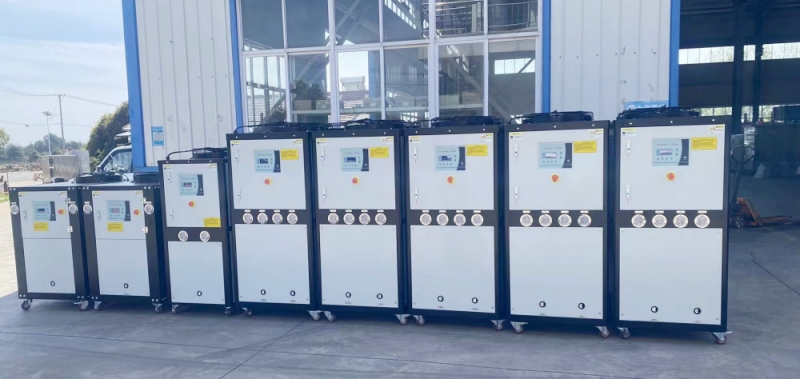
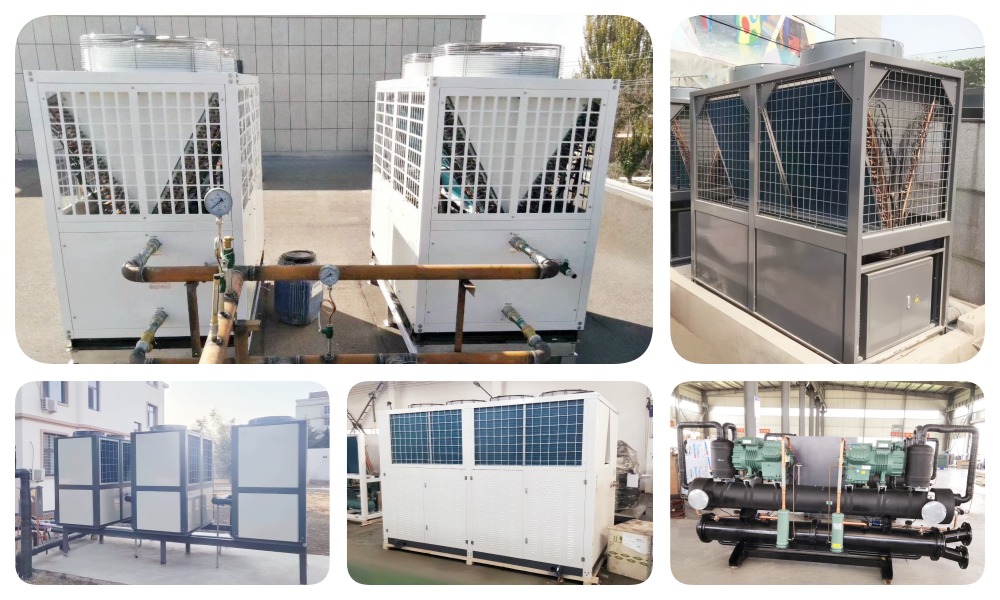
Hengde provides Industrial Chiller and temperature-control solutions for production equipment requiring stable process cooling. The company designs systems according to the actual cooling load, water temperature, flow rate, ambient conditions, voltage and other application requirements rather than using a one-size-fits-all configuration.
For coating applications, Hengde can provide customized industrial chiller solutions with temperature monitoring, water circulation and protection functions according to the equipment structure and process requirements.
This application-oriented approach is particularly useful when a coating production line has multiple cooling points, different temperature requirements or limited installation space. Instead of selecting a chiller first and adapting the production line afterward, Hengde works from the cooling requirements of the equipment and then develops the appropriate cooling configuration.For coating equipment manufacturers, the most useful Water Chiller and Air Chiller suppliers are not necessarily the one offering the largest cooling capacity. A supplier that understands heat load, flow distribution, temperature stability and equipment integration can make the entire cooling system easier to operate and maintain.
WhatsApp : +8618351969707
Correo electrónico : sales@sinohengde.com
DIRECCIÓN : No.1 Jiangyang Line, Hongqi community, Hengxi Street,Jiangning, Jiangsu, China